The Iran War Just Did Something Nobody Expected: It Made Indians Discover India

Riya from Pune was supposed to be in Bali this week. She had the itinerary saved, the hotel booked, the Instagram countdown running. Then the rupee tanked, flight prices doubled, and her mother sent a WhatsApp voice note: “Beta, have you seen Jaipur?”
She cancelled Bali. She booked Udaipur instead. And she is not alone.
The Rupee Tells the Story First
The Indian rupee has been on a one-way slide. It breached 95 against the dollar early this month, then kept falling toward 96 — marking its sharpest decline since the taper tantrum of 2013, according to LSEG data.
For someone planning a foreign holiday, the math is brutal. A trip that cost ₹5 lakh in January now costs nearly ₹5.5 lakh — and that is before you account for surging airfares.
The numbers capture the scale of the retreat. According to RBI data, outward remittances for travel under the Liberalised Remittance Scheme fell from $1.65 billion in January to $1.30 billion in February, and further to $1.09 billion in March — a 34% collapse in three months.
UBS slashed India’s FY27 growth forecast from 6.7% to 6.2%, CNBC reported.
Airlines Ground the Summer Plan
The aviation sector felt the impact first. Air India cut 22-27% of international flights between June and August, Reuters reported. IndiGo trimmed 5-10% of domestic capacity, according to the Economic Times. The culprit: jet fuel prices surging on crude oil chaos.
India imports 85% of its fuel needs, and roughly half of its crude passes through the Strait of Hormuz, per PIB data. The country’s crude import bill hit $174.9 billion in FY26 — 22% of total imports, according to CNBC.
What was already an expensive overseas trip has now become a scarce one.
Modi’s Pitch: Stay Home, Spend Here
On May 11, Prime Minister Modi addressed the nation from Hyderabad. The Iran war posed “severe risks” to the Indian economy, he warned, according to CNBC. He urged citizens to curb fuel use, carpool, work from home — and most pointedly, to reduce overseas travel.
This was not just advice. It was economic triage. Every dollar saved on a foreign holiday is a dollar that stays in the forex reserves.
The Domestic Boom Nobody Planned
Here is where the story turns. With foreign travel off the table — too expensive, too uncertain, too complicated — Indian travelers are looking inwards. And the domestic hospitality industry is seeing the payoff.
Hotel occupancy across India crossed 73%, industry reports showed. Domestic bookings surged approximately 35% in 2026. A survey by Allianz Partners and Ipsos found 42% of Indian travelers now prefer domestic destinations over international ones.
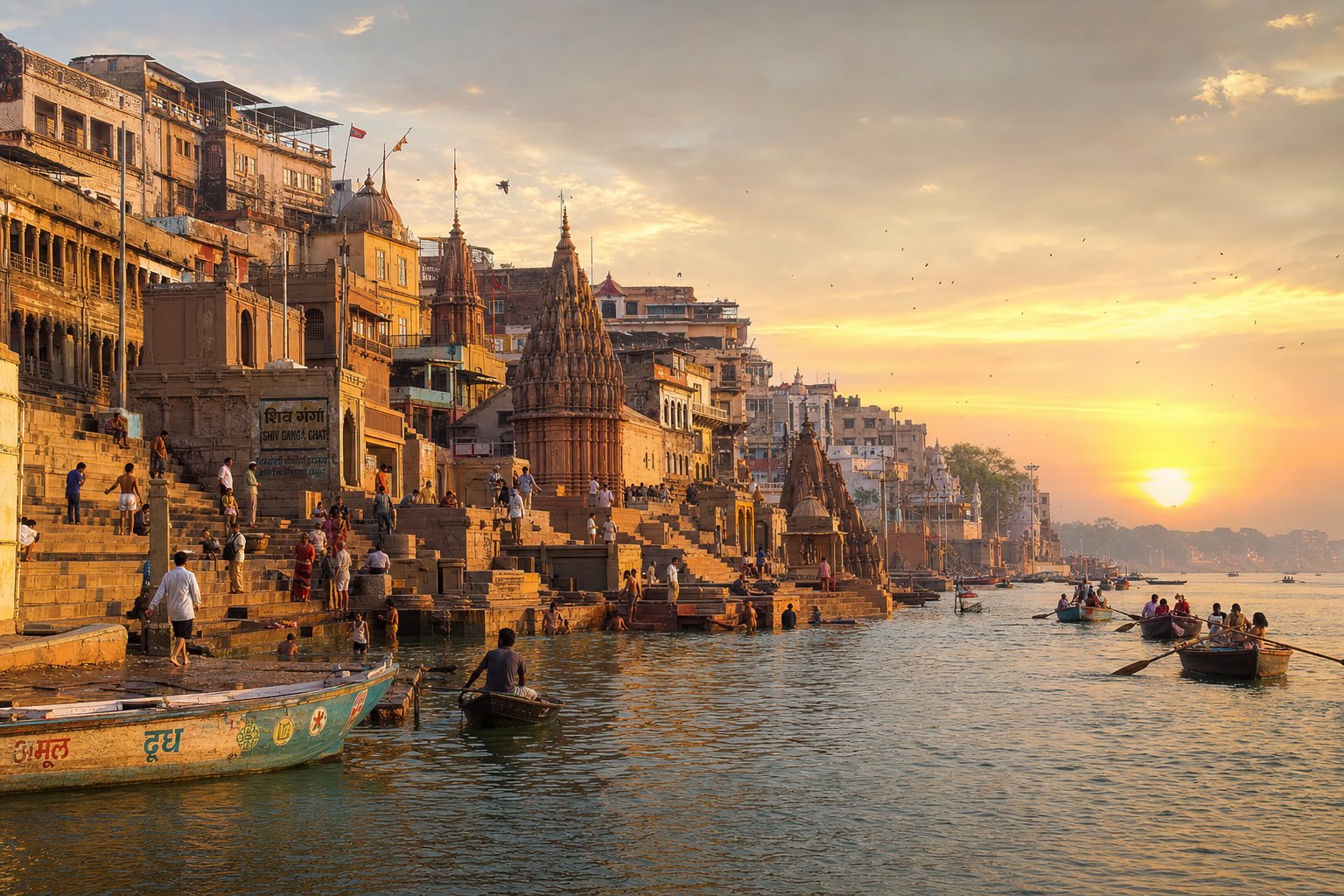
Jaipur’s heritage havelis are packed. Goa is seeing off-season demand rivaling peak December. Manali homestays are booked out weeks in advance. Kerala backwater cruises have waitlists. The domestic tourism ecosystem — hotels, restaurants, local transport, small businesses in tourist towns — is getting a lifeline it did not expect.
Indian Hotels Company Limited — the Tata Group firm behind the Taj brand — told CNBC that Modi’s push “benefits domestic tourism.” India’s hotel market was worth approximately $25 billion in 2024, projected to reach $31 billion by 2029, according to Tourism Ministry data cited by CoStar. The current crisis is accelerating that trajectory.
But It Is Not All Sunshine
Jefferies cut its price target on Indian hotel stocks, warning that revenue per available room growth is moderating to around 5%. The domestic surge is real, but inflation is eating into margins.
There is also the question of sustainability. If fuel becomes unaffordable, even road trips to hill stations get expensive. The boom has a ceiling, and nobody knows where it is.
32.7 million Indians traveled abroad in 2025, with over 14 million for leisure, according to the Tourism Ministry. If even half those leisure travelers redirect budgets inward, the domestic hospitality sector is looking at a windfall it did nothing to earn.
Sometimes the best marketing campaign is a currency crisis and a war nobody wanted.
Key Takeaways
- The rupee’s slide to 96 against the dollar — the worst since the 2013 taper tantrum — has made every foreign trip significantly more expensive, with a ₹5 lakh holiday now costing ₹5.5 lakh or more.
- Airlines are retreating: Air India cut 22-27% of international flights and IndiGo trimmed domestic capacity by 5-10% as jet fuel costs surged on crude chaos centered at the Strait of Hormuz.
- PM Modi’s May 11 appeal to reduce overseas travel struck a nerve, sending domestic bookings up ~35% and hotel occupancy past 73% across major Indian markets.
- The boom has limits — Jefferies warns RevPAR growth is moderating to 5%, and rising fuel costs could cap even domestic road travel.
- India’s $25B hotel market is accelerating toward $31B by 2029, with the crisis compressing years of domestic tourism growth into months.


