Can Chernobyl’s Mutant Wolves Resist Cancer? New Study Finds Clues

In the bizarre aftermath of the Chernobyl nuclear disaster in 1986, nature has exhibited astonishing resilience and adaptation in the face of catastrophic radiation levels.
To restrict access, authorities cordoned off a 1,000 square mile (2,590 square kilometers) zone.
Among the most mystifying inhabitants of the exclusion zone are the mutant wolves, whose very existence seems like confirmation of nature’s ability to adapt even in an irradiated landscape.
Recent findings from a compelling study suggest that these wolves may harbor a surprising defense against one of nature’s deadliest foes: cancer due to the very high amount of radiation all living things were exposed to.
During the Society of Integrative and Comparative Biology’s Annual Meeting, research was presented indicating that despite constant radiation exposure, the wolves remained unaffected and continued to roam freely.
IFL Science stated that wolves within the CEZ endured daily radiation doses exceeding 11.28 millirem—more than six times the legal safety limit for humans.
According to a report by Sky News, the study, conducted by Cara Love, an evolutionary biologist, and ecotoxicologist from Princeton University’s Shane Campbell-Staton lab, spanned nine years of observation of the wolves within the CEZ.
The study on Mutant Wolves in Chernobyl
In 2014, Love and her team equipped wolves in the CEZ with GPS radio collars containing radiation dosimeters.
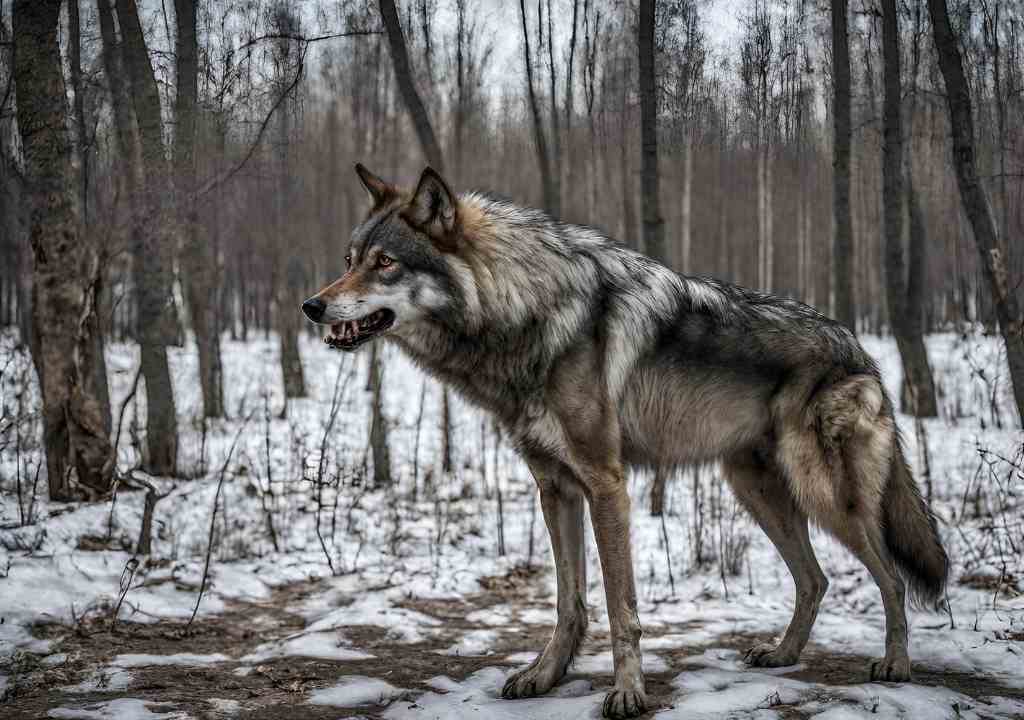
Concurrently, blood samples were collected to examine their responses to cancer-causing radiation. Through the collars, the research team precisely monitored the wolves’ movements and assessed their levels of radiation exposure.
Furthermore, the team noted significant differences in the immune systems of the Chernobyl wolves compared to those in other regions. Remarkably, the wolves’ genomes displayed resistance to cancer, a crucial finding emphasized by Love.
Specific regions within the wolves’ genome were identified to harbor this resilience to heightened cancer risks, mirroring similar effects observed in dogs residing within the CEZ.
For decades, scientists have been intrigued by the wildlife that has thrived in the exclusion zone surrounding the Chernobyl nuclear power plant.
Despite the radiation levels far surpassing lethal doses for humans, the area has become a haven for a variety of species, including wolves.
These canines, whose genetic makeup has been altered by radiation exposure, have captured the attention of researchers seeking to understand the long-term effects of nuclear disasters on biodiversity.
Cara Love’s research represents a departure from conventional studies that primarily focus on identifying mutations associated with increased cancer risk, such as the BRCA gene linked to breast cancer.
Instead, Love’s work seeks to uncover mutations that confer resilience against cancer, potentially offering insights into improving cancer survival rates. Regrettably, due to the challenges posed by the COVID-19 pandemic and the persistent conflict in the region, Love and her team have been unable to return to the Chernobyl Exclusion Zone.
The next steps in Cara Love’s research
Despite these setbacks, Love emphasized the importance of prioritizing the safety of individuals and collaborators in the area.
Presenting her findings in Seattle, Washington, in January, Love underscored the need to explore how similar gene mutations observed in wolves and other wildlife within the Chernobyl Exclusion Zone could translate into enhanced cancer survival rates in humans.
As they look ahead, researchers intend to delve deeper into understanding the mechanisms underlying these mutations and their potential applications in advancing cancer research and treatment strategies.
The study’s findings have sparked both intrigue and cautious optimism within the scientific community. Could it be that the same radiation that wrought havoc on the environment has inadvertently conferred a form of protection against cancer in these resilient creatures?
While the mechanisms behind this potential resistance remain elusive, researchers are eager to unravel the mysteries hidden within the wolves’ DNA.
The implications of this discovery extend far beyond the boundaries of Chernobyl. As humanity grapples with the devastating toll of cancer, insights gleaned from nature’s response to extreme conditions may offer invaluable lessons for medical research and treatment.
By studying the genetic adaptations of Chernobyl’s mutant wolves, scientists hope to unlock novel approaches to cancer prevention and therapy, inspired by the resilience of life in the face of adversity.
However, amid the optimism surrounding this discovery, questions and uncertainties linger. The long-term consequences of radiation exposure on the health and longevity of Chernobyl’s wildlife remain a topic of ongoing investigation.
Furthermore, the potential implications for human health and medical science are complex and multifaceted, requiring rigorous scrutiny and further research.


