The Digital Siege: How the Cockroach Janta Party’s Meteoric Rise Met the Iron Fist of the State

The digital world, for all its promise of boundless expression, can transform into a swift, silent dungeon, as Abhijeet Dipke discovered one unsettling day in 2026.
He stared at his phone, the screen a cold mirror reflecting his disbelief. His personal Instagram, a digital extension of himself, had been hacked, its contents ravaged, while the official Cockroach Janta Party (CJP) Instagram account, a vibrant hub of dissent and humour, simply vanished.
Then came the message on X, stark and unambiguous: “This account has been withheld in India in response to a legal demand.” The digital ground beneath his feet, which had just months ago felt like a launchpad, was now crumbling.
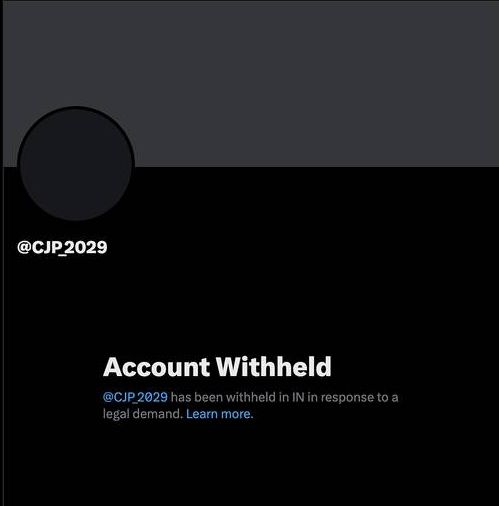
Dipke, a 30-year-old political communications strategist and a student across continents, found himself at the epicentre of a digital siege, a chilling testament to the fragility of online movements in the face of state power.
The Unlikely Symbol of Dissent
This wasn’t just about a few blocked social media accounts; it was a potent symbol of a deeper struggle for the soul of India’s online public square.
The CJP, born from a moment of judicial disdain, had rapidly morphed into an unexpected rallying cry for a generation feeling unseen and unheard. It began with a single, controversial utterance that ignited a firestorm.
Chief Justice of India Surya Kant, during an open court hearing, had spoken of “parasites” attacking the system, equating youngsters “who don’t get any employment and don’t have any place in a profession” to cockroaches.
He later clarified his remarks were misquoted, aimed at those using “fake and bogus degrees” to enter the legal profession, but the damage was done.
The image of the cockroach, traditionally a symbol of resilience and survival in the face of adversity, was instantly reclaimed by India’s Gen Z.
It became an unlikely emblem of defiance, a badge of honour for those dismissed by the establishment. The CJP capitalized on this sentiment, transforming judicial contempt into a movement.

The party, a satirical riff on the incumbent Bharatiya Janata Party (BJP), was conceived as an online collective, not a formal political entity. Its membership criteria were a tongue-in-cheek reflection of societal anxieties: “unemployed, lazy, chronically online, and possessing ‘the ability to rant professionally’.” Yet, beneath the humour, a serious critique of the status quo simmered.
The CJP’s manifesto, as audacious as its name, even declared its intent to “cancel the licenses of all media houses owned by Ambani and Adani,” directly challenging the perceived corporate capture of information.
This wasn’t just satire; it was a mirror held up to power, reflecting its perceived flaws with biting wit. The movement’s rapid ascent was a direct consequence of this potent mix of humour and pointed political commentary, resonating deeply with a youth population grappling with economic uncertainty and a yearning for change.
The Digital Battleground: Data and Disruption
The CJP’s trajectory was nothing short of meteoric, a testament to the viral power of online mobilisation. Its official X account, created just a day after May 15, swiftly gathered momentum, becoming a digital town square for the disaffected.
You could almost feel the collective energy, the surge of engagement as young Indians found a voice in this irreverent movement.
When the block command was reportedly issued, the CJP’s X account had already amassed around 90,000 followers. This wasn’t a fringe group; it was a rapidly expanding digital phenomenon. The timing of the restriction, at a crucial juncture of its growth, suggests a calculated effort to nip the movement in the bud.
But the CJP’s influence extended far beyond X. The party quickly gained millions of followers across platforms, with its Instagram account becoming a powerhouse.
It amassed more than 19 million Instagram followers, a staggering number that dwarfed many established political entities. This was raw, organic growth, driven by genuine public sentiment.
The Instagram account remained active with 14.8 million followers until a report was filed, leading to its eventual blocking or taking down.
This pattern of restriction across platforms points to a coordinated effort, a digital dragnet cast wide to ensnare the burgeoning movement. The digital siege was comprehensive, targeting every avenue of expression.
The restrictions on the CJP’s X account came under the formidable Section 69(A) of the Information Technology Act, 2000.
This legal provision grants the Ministry of Electronics and Information Technology (MeitY) the power to issue blocking orders for public access to any information through any computer resource.
It is a powerful tool, often invoked in matters of national security.
The Intelligence Bureau (IB) provided the inputs for this restriction, citing “national security concerns” and a threat to the “sovereignty of India.” The IB argued that CJP’s content was “inflammatory” and was “gaining rapid traction among youth.”
This framing transformed a satirical movement into a perceived national threat, a chilling redefinition of dissent.
The founder, Abhijeet Dipke, didn’t just face official blocks; his personal digital life became a target. His personal Instagram was hacked, and a backup X account was also taken down.
This multi-pronged attack suggests a deliberate campaign, extending beyond mere content moderation to direct interference and disruption, creating a climate of fear and uncertainty.
The table below illustrates the extent of the digital crackdown:
Platform Restrictions Timeline
Multiple CJP-linked Accounts Were Restricted Across Platforms
Over a short period in 2026, multiple social media accounts linked to CJP and its founder were either blocked, taken down, or compromised.
CJP Official
Account reportedly restricted following a legal demand issued under Section 69(A) of the IT Act citing “national security concerns.”
CJP Official
Founder alleged the action was part of a broader crackdown after the report gained attention.
CJP Back-up Account
Backup account also disappeared during the same period, according to statements made by the founder.
Founder’s Personal Account
The founder claimed the personal Instagram account was compromised amid the ongoing controversy.
This systematic dismantling of their digital presence highlights the vulnerability of online movements to state-orchestrated censorship. It’s a stark reminder that even the most viral collective can be silenced if the levers of power are pulled decisively.
The government’s actions, justified by “national security,” cast a long shadow over the future of online political expression.
Voices from the Frontlines
The narrative around the CJP’s crackdown is layered with competing interpretations, each voice adding a brushstroke to a complex portrait of digital democracy under duress.
At the heart of the CJP’s defiance is its founder, Abhijeet Dipke, whose simple question echoed across the digital void after the blocks: “Why are you afraid?”
“Why You Afraid?”
— Abhijeet Dipke, CJP Founder
This defiant query encapsulates the movement’s challenge to authority, questioning the state’s apprehension of a satirical online collective.
Dipke’s words suggested that the government’s actions stemmed not from genuine national security threats, but from a fear of dissent, even if packaged in humour. It was a direct accusation of insecurity from the powerful.
The Intelligence Bureau, however, presented a different rationale, painting the CJP as a genuine threat. They asserted that CJP’s content was “inflammatory and gaining rapid traction among youth,” thereby posing “national security concerns” and a threat to the “sovereignty of India.”
This official stance frames the satirical content as a dangerous contagion, capable of undermining the very fabric of the nation.
“[CJP’s content was] inflammatory and gaining rapid traction among youth… [posing] national security concerns and a threat to the sovereignty of India.”
— The Intelligence Bureau
The initial spark for the CJP, Chief Justice of India Surya Kant’s comments, also stands as a pivotal moment.
His comparison of unemployed youth to “cockroaches” who “become media…social media” or Right to Information activists who “start attacking everyone” revealed a deep-seated contempt for certain forms of public engagement.
His subsequent clarification, though, did little to quell the outrage that had already fuelled the CJP’s inception.
The CJP’s website, in contrast to these official narratives, champions inclusivity and a rejection of traditional divides: “We do not check religion, caste, or gender.”
This statement directly counters the divisive rhetoric often seen in Indian politics, positioning the CJP as a unifying force for the disaffected, regardless of their background. It underscores the movement’s commitment to broad-based appeal.
“We do not check religion, caste, or gender.”
— The CJP Website
The backdrop to this conflict is the broader political climate under the BJP, which came to power in 2014 under Prime Minister Narendra Modi. Critics accuse the BJP of stifling civil liberties, pursuing a Hindu-first agenda, and inflaming religious divisions.
The BJP, for its part, has consistently denied these characterizations, maintaining that its policies are for the betterment of all Indians.
This clash of narratives — a satirical movement advocating for unity versus a state citing national security and a judiciary expressing disdain for certain forms of activism — highlights the growing tension in India.
It’s a battleground where online expression and digital rights are increasingly pitted against governmental control and national security pretexts. The stakes are profoundly high for the future of democratic discourse.
A Test of Resilience: What Comes Next?
The crackdown on the Cockroach Janta Party is not merely an isolated incident; it serves as a powerful case study in the evolving dynamics of digital authoritarianism and civil resistance.
The immediate implication is clear: the party faces “huge hurdles” in its quest to influence Indian politics, hurdles that extend far beyond the usual challenges of political organization. This is a battle for visibility itself.
The social media restrictions, justified by “national security concerns,” underscore a broader trend of suppression by authorities, where online dissent is increasingly conflated with sedition or threats to national integrity.
This redefinition of political speech chills legitimate criticism, forcing movements into a precarious dance with censorship. It creates a chilling effect that discourages others from speaking out.
However, the CJP’s rapid rise and subsequent crackdown have also brought global attention to the issue of online expression in India.
The movement gained the world’s attention, sparking “outrage, jokes, and a humorous political uprising,” proving that even a satirical entity can become a significant flashpoint. This international scrutiny adds a layer of pressure on the Indian government.
The fact that the block command was reportedly issued when the X account had only around 90,000 followers, before its exponential growth, indicates a preemptive strike by the authorities.
This suggests an attempt to curb its growth before it could fully blossom into a larger, more formidable force. It’s like trying to extinguish a spark before it becomes a wildfire.
The founder’s allegations of a broad social media crackdown, including hacks and takedowns beyond official orders, paint a picture of a murky digital battlespace.
In this environment, unsubstantiated “claims of Pakistani followers” or even the specter of “death threats” can be weaponized to delegitimize and silence online voices. It adds another layer of complexity to the challenges faced by such movements.
The CJP’s emergence reflects a sharp rebuke to the ruling establishment, tapping into a wellspring of youth disaffection and a desire for alternative political narratives. Its appeal lies in its authenticity, its irrelevance, and its direct challenge to the perceived elitism and cronyism of traditional politics.
This makes it a potent, albeit unconventional, force.
The movement’s potential to change Indian politics lies not in winning elections as a formal party, but in shifting discourse, mobilizing youth, and exposing the vulnerabilities of the powerful.
By becoming a symbol of resistance, even in its restricted state, the CJP continues to challenge the monopoly of established political narratives. It embodies the spirit of the underdog.
The controversy surrounding the CJP also fuels a growing debate around online expression and platform action. Social media companies, caught between legal demands from governments and their users’ rights to free speech, find themselves in an increasingly difficult position.
Their decisions have profound implications for democratic discourse worldwide. This tension is unlikely to dissipate soon.
The legacy of the CJP may well be less about its direct political achievements and more about its role as a catalyst for awareness regarding digital rights and state control.
It serves as a stark reminder that in the age of information, the battle for hearts and minds is increasingly fought on digital terrain, where bytes can be as powerful as ballots. The “cockroaches” have proven their resilience.
The movement’s manifesto, with its bold declaration to “cancel the licenses of all media houses owned by Ambani and Adani,” while satirical, points to a deep-seated public frustration with media consolidation. This illustrates the CJP’s ability to articulate grievances that resonate widely, even if its methods are unconventional. It speaks to a desire for media plurality.
Abhijeet Dipke, who previously worked with the Aam Aadmi Party (AAP) before moving to the US, brings a strategic understanding of political communication to the CJP.
This background suggests that the movement, despite its satirical veneer, is guided by a shrewd awareness of political dynamics. It is not merely a spontaneous outburst but a calculated form of resistance.
Ultimately, the CJP’s journey underscores a fundamental tension: the boundless potential of digital platforms for democratic expression versus the inherent power of the state to regulate and restrict it.
The resilience of online communities, their ability to adapt and find new channels, will be severely tested in this ongoing struggle. The fight for the digital commons continues.
The Echo of Dissent
As the dust settled on the digital battleground, Abhijeet Dipke likely felt a mix of frustration and grim determination. The immediate silence after the cacophony of millions of followers was deafening, a stark reminder of the power wielded by the state. Yet, the story of the Cockroach Janta Party was far from over; it had merely entered a new, more challenging phase.
The blocks and hacks, intended to silence, had instead amplified the CJP’s message, transforming it from a mere satirical movement into a symbol of a larger fight. The “cockroaches,” once a derogatory term, had become an enduring emblem of tenacity, multiplying and adapting even in the face of chemical warfare. Their spirit, it seemed, was uncrushable.
Dipke’s question, “Why are you afraid?”, now carried an even deeper resonance. It hung in the air, unanswered by the authorities, but reverberating through the digital underground where new channels of dissent would inevitably form. The state had managed to shut down specific platforms, but it could not extinguish the underlying sentiment that had given rise to the CJP.
The crackdown on the Cockroach Janta Party became a cautionary tale, but also an inspiring one. It showed the immense power of collective online action, even in its most irreverent forms, to challenge the established order. And it proved that sometimes, the most effective way to fight an unseen enemy is to make them reveal their fear. The cockroaches, after all, always find a way to survive.


