The Unseen Currents: Why Voters Keep Choosing the BJP, Even When the Report Card is Mixed

In the intricate dance of Indian democracy, some victories defy easy explanation, revealing a deeper story about what truly moves a nation.
Imagine you’re watching a game of chess. One player seems to be making moves that, by conventional logic, aren’t the strongest.
Their pieces aren’t always perfectly positioned for defense, and some of their earlier plays might have even cost them pawns.
Yet, somehow, they keep winning. This isn’t just a game; this is the perplexing reality of the Bharatiya Janata Party’s (BJP) electoral success in states like West Bengal and Assam.
We’re talking about a party that has managed to sweep crucial elections, often against the backdrop of national conversations about economic challenges or social tensions.
This isn’t about cheering or critiquing; it’s about understanding how this happens, and why it matters to everyone watching India’s political future.
The Eastern Front: A New Battlefield Emerges
For decades, West Bengal was a fortress, first for the Communist Party of India (Marxist) for an astonishing 34 years, then for Mamata Banerjee’s Trinamool Congress (TMC).
The BJP was, frankly, an afterthought. Their presence was minimal, almost negligible. Assam, while having a more varied political history, also wasn’t traditionally a BJP stronghold in the way we see it today.
Yet, in recent assembly elections, the BJP didn’t just gain ground; they staged what many called historic victories in both states.
Think of it like a corporate takeover in a fiercely competitive market. For years, established brands dominated. Then, a new player, often seen as an outsider, starts chipping away, not just with better products, but with a different kind of marketing, a new narrative. Suddenly, they’re not just competing; they’re winning big.
These elections weren’t just about local issues; they were seen as a referendum on the BJP’s national strategy, a test of their ability to penetrate regions where their ideology was once considered alien.
It was about proving they could expand beyond their traditional Hindi heartland base, pushing their influence eastward.
The stakes were incredibly high. For the BJP, these wins meant solidifying their national footprint and demonstrating their electoral machine’s unparalleled reach. For the opposition, it was a stark reminder that old playbooks might no longer work.
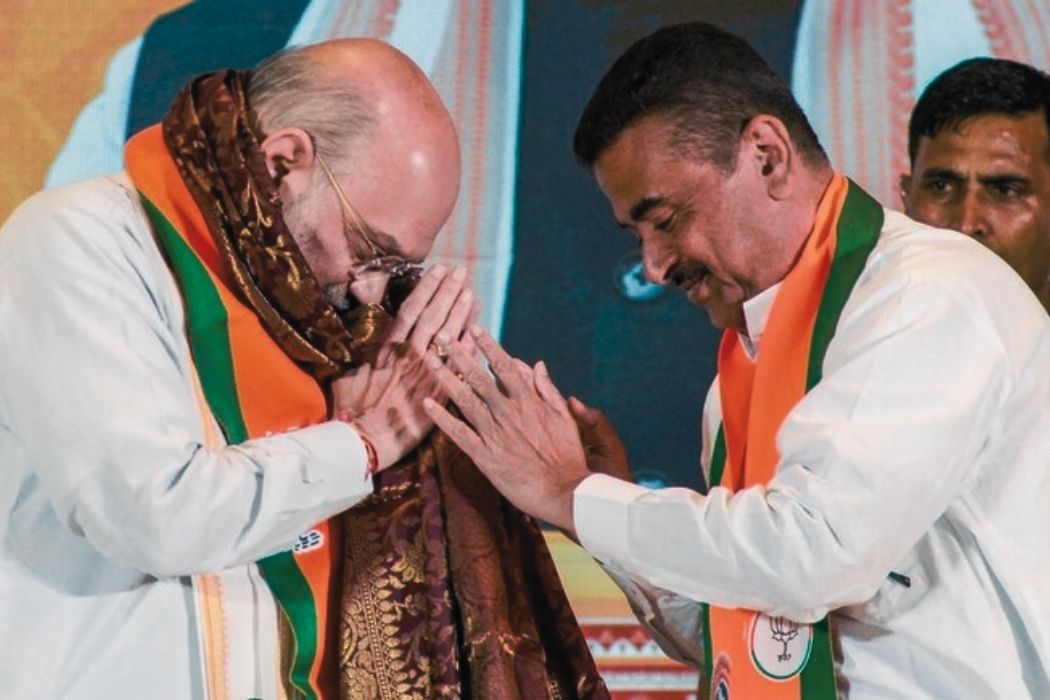
And for the people of these states, it signaled a significant shift in their political landscape, promising both new opportunities and new challenges. This wasn’t just about who got to govern; it was about the changing identity of these states themselves.
The Puzzle Pieces: Beyond the Numbers Game
Here’s where it gets truly fascinating, and perhaps, a little counterintuitive. Many economists, social scientists, and even everyday citizens might point to various national development metrics that show a mixed picture.
We hear about concerns over unemployment rates, which have seen fluctuations, or rising inflation impacting household budgets.
There are ongoing debates about the efficacy of certain government policies and how they translate into tangible improvements for the average person.
Yet, despite these discussions, the BJP continues to secure significant mandates.
So, if a straightforward “report card” on development isn’t always gleaming, what else is at play? It’s like judging a restaurant not just by its food, but by the entire experience: the ambiance, the service, the story it tells.
The BJP’s success seems to stem from a masterful blend of factors that often transcend traditional economic analysis. Here are some of the key ingredients:
- Identity Politics: In Assam, the Citizenship Amendment Act (CAA) and the National Register of Citizens (NRC) played a significant role. The BJP successfully framed these policies around protecting the rights of indigenous Assamese people and Bengali Hindus, creating a narrative of “us versus them” against perceived illegal immigrants. This resonated deeply with a population grappling with demographic changes.
- Cultural Nationalism: In West Bengal, the BJP tapped into Bengali Hindu identity, often portraying the incumbent TMC as indulging in “minority appeasement.” They invoked symbols like “Jai Shri Ram” and focused on cultural heritage, creating a sense of shared identity and belonging that cut across economic lines. This was about reclaiming a perceived lost pride.
- Unrivaled Organizational Strength: The BJP, backed by its ideological parent, the Rashtriya Swayamsevak Sangh (RSS), boasts an incredibly robust ground game. They have dedicated cadres who work tirelessly at the booth level, reaching out to individual voters. This “machine politics” ensures that messaging reaches every corner, and voters are mobilized effectively.
- The Modi Factor: Prime Minister Narendra Modi’s personal charisma and appeal remain a significant draw. His image as a strong, decisive leader, combined with the promise of a “double engine sarkar” (meaning the same party ruling both the state and the center for smoother development), often overshadows local issues or concerns. Voters often project their trust in him onto local candidates.
- Targeted Welfare Schemes: While overall development might be debated, the BJP has been effective in implementing central government welfare schemes directly to beneficiaries. Programs like PM-KISAN (direct income support for farmers), Ujjwala Yojana (free cooking gas connections), and Jan Dhan accounts (financial inclusion) create a direct link between the central government and the voter, fostering goodwill.
- Opposition Weakness: In both states, the opposition faced internal divisions, a lack of a cohesive narrative, and often struggled to counter the BJP’s aggressive campaigning. This vacuum allowed the BJP to define the electoral discourse on its own terms.
- Social and caste engineering: something many early political observers underestimated. The party worked aggressively to consolidate support among the Matua community — a large group of mostly Dalit Hindu refugees with roots in present-day Bangladesh — by positioning itself as a protector of refugee rights through promises linked to the Citizenship Amendment Act (CAA). It also expanded its outreach among Scheduled Castes, Scheduled Tribes, and tribal communities in North Bengal and Junglemahal, regions that had long felt economically and politically neglected. This strategy helped the party move beyond being seen as merely an “outsider Hindi belt party” and allowed it to build a deeper grassroots presence inside Bengal’s complex social landscape.
Consider this simplified view of voter priorities, which helps illustrate the shift:
| Traditional Voter Priority (Often) | Emerging Voter Priority (BJP’s Focus) |
|---|---|
| Jobs and Economic Growth | Cultural Identity and Belonging |
| Local Infrastructure Development | National Security and Pride |
| Healthcare and Education Access | Direct Welfare Scheme Benefits |
| Secular Governance | Protection of Majority Interests |
This table isn’t to say that traditional priorities vanish, but rather that the BJP has skillfully elevated and capitalized on these emerging priorities, making them central to their appeal.
They’ve understood that for many, the sense of who they are, their cultural roots, and their national pride can be as powerful, if not more powerful, than purely economic considerations at the ballot box.
Another major force behind the BJP’s growth was its sophisticated use of media and social media machinery, which helped shape political narratives far beyond traditional rallies and speeches.
The party built an enormous digital ecosystem through WhatsApp groups, Facebook pages, YouTube channels, and highly localized messaging networks that could reach voters directly in their own language and cultural context.
In states like West Bengal, where political emotions often run deep, short viral videos, emotionally charged slogans, religious symbolism, and constant narrative repetition helped the BJP remain at the center of public conversation.
Supportive television coverage and aggressive online campaigning also allowed the party to amplify issues such as political violence, corruption allegations, and identity politics far more effectively than many of its opponents.
By the time elections arrived, the BJP was not merely contesting for votes on the ground; it was already dominating large parts of the information battlefield online, where modern political perceptions are increasingly formed.
The Human Ripple Effect: Who Feels It Most?
When the political winds shift this dramatically, the impact isn’t just on party headquarters; it’s felt by real people, in their daily lives. So, who gains and who loses in this new political landscape?
For those who align with the BJP’s vision, particularly the Bengali Hindu community in West Bengal or the indigenous groups in Assam, these victories bring a sense of vindication and empowerment.
They feel their voices are finally being heard, their cultural identity affirmed, and their security concerns addressed. A small shopkeeper in Guwahati, worried about perceived demographic shifts, might feel a renewed sense of confidence.
A homemaker in rural Bengal, who has received a free gas connection through the Ujjwala scheme, might feel a direct benefit from the central government, irrespective of the state government’s performance.
However, for others, particularly minority communities and those who champion a more pluralistic or secular vision, these wins can bring apprehension.
Discussions around CAA and NRC, while appealing to some, raise fears of marginalization and disenfranchisement for others. A Muslim farmer in a border district of Assam might worry about their citizenship status, even if they’ve lived there for generations.
An intellectual in Kolkata might lament what they perceive as a decline in the state’s inclusive cultural traditions. The shift means that the political discourse often becomes sharply polarized, leaving little room for the middle ground.
What People Are Saying: The Heart of the Matter
“It’s no longer just about the price of onions or the condition of the roads. For many, especially in these states, elections have become referendums on identity, on culture, on who we are as a people. The BJP understood this pulse, while others were still talking about GDP.”
This quote, an illustrative perspective capturing a prevalent sentiment among political observers and some voters, cuts to the core of the issue. It highlights a profound shift in what drives electoral choices.
For a long time, Indian politics was often seen through the lens of ‘Roti, Kapda, Makaan’ – food, clothing, and shelter – basic necessities and economic well-being.
And while these remain important, the BJP has successfully introduced and amplified other dimensions.
They’ve effectively woven narratives around national pride, cultural heritage, and the perceived threats to a particular way of life.
This doesn’t mean voters don’t care about their economic circumstances, but it suggests that these identity-driven narratives can, at times, become powerful enough to sway votes, even when economic conditions are challenging.
It’s a complex interplay where emotions and a sense of belonging often override purely rational economic calculations.
This is why the ‘mixed report card’ doesn’t always translate into electoral defeat; the grading system itself has changed.
What Happens Next: The Road Ahead
These victories in West Bengal and Assam are more than just state-level successes for the BJP; they are a blueprint.
What we saw unfold in these eastern states is likely to be replicated, in different forms, across other regions of India where the BJP seeks to expand its footprint.
You can expect a continued emphasis on cultural nationalism, a robust ground organization, and the powerful personal appeal of Prime Minister Modi to be central to their strategy.
For the BJP, it’s about consolidating these gains, ensuring that the new voters they’ve attracted remain loyal, and proving that their “double engine sarkar” promise delivers tangible benefits.
For the opposition parties, the road ahead is challenging. They face the urgent task of devising a new strategy that can counter the BJP’s potent mix of identity politics and organizational strength. Simply pointing to economic shortcomings might not be enough.
They will need to forge greater unity, articulate a compelling alternative vision that resonates deeply with voters, and develop their own robust ground-level machinery.
The next general elections and upcoming state polls will be crucial tests of whether they can adapt to this new political reality or if the BJP’s current winning formula will continue its unstoppable march.
The Bottom Line: A New Political Compass
The BJP’s triumphs in West Bengal and Assam offer a profound lesson: modern Indian politics is navigating by a new compass.
While economic development and welfare remain important, the magnetic north for many voters has shifted towards cultural identity, national pride, and a powerful sense of belonging.
These elections underscore that for a significant segment of the electorate, the feeling of being seen and heard, of having their cultural anxieties addressed, can be as compelling, if not more so, than a purely economic promise.
It’s a complex, multi-layered story where the heart often votes as loudly as the wallet, redefining what it truly means to win in India today.


