The Cockroach Censor: Why India’s Battle Against Satire Reveals a Deeper Fragility

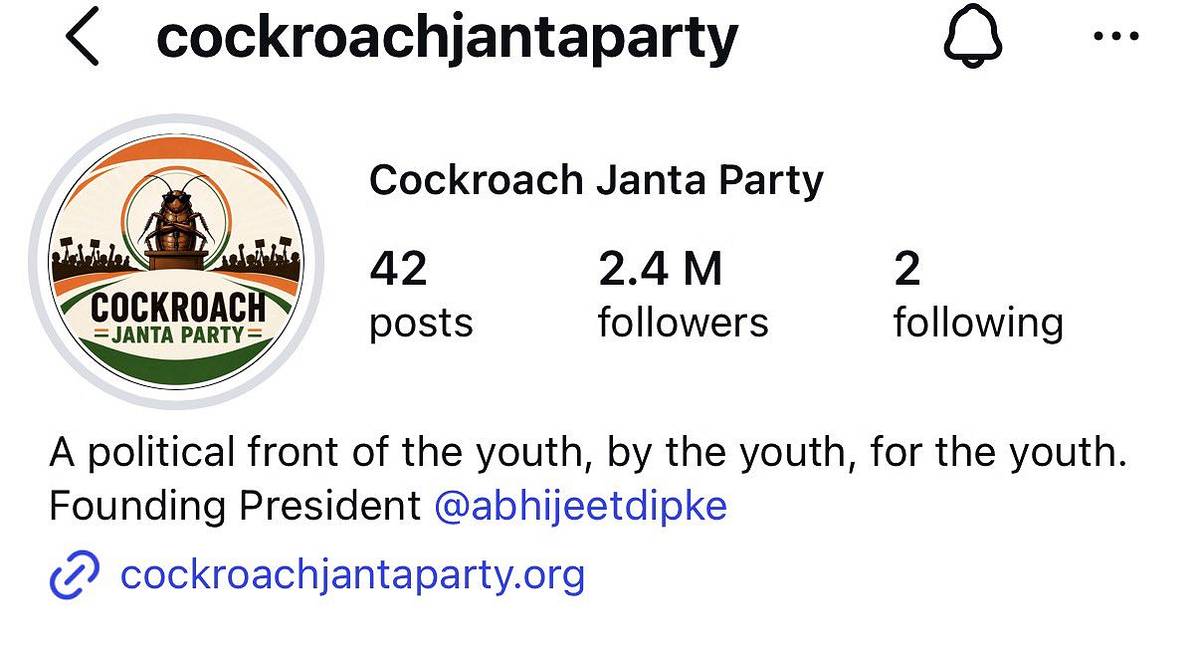
Imagine a political movement, born from a single insult, snowballing into a digital phenomenon with nearly 12 million Instagram followers in just three days.
This was the meteoric rise of the Cockroach Janta Party (CJP), an outfit designed to mock power, only to find itself silenced by it.
On May 21, 2026, just five short days after its inception, the CJP’s X account, @CJP_2029, was abruptly withheld in India.
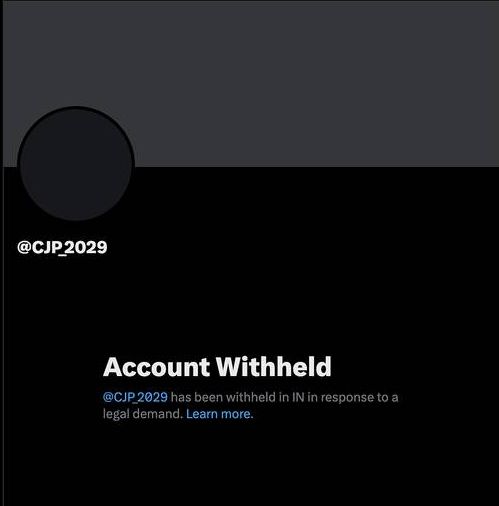
The official reason provided: “in response to a legal demand.” We are left to wonder: what kind of legal demand could silence a satirical group so swiftly, and what does this act of suppression truly tell us about the state of free speech in India?
The Conventional Wisdom: A State Afraid of Laughter
The immediate and widespread interpretation of the CJP’s silencing was straightforward, almost axiomatic.
Here was a fledgling satirical group mocking the establishment, and the government predictably moved to crush it. This narrative paints a picture of a state so insecure, so allergic to dissent, it cannot even tolerate a “joke.”
The CJP, founded by Abhijeet Dipke, a 30-year-old political communications strategist, emerged directly from a provocative statement. On May 15, 2026, Chief Justice of India Surya Kant made remarks that ignited a firestorm.
Chief Justice of India Surya Kant on May 15, 2026, compared unemployed youth to “cockroaches” and “parasites of society.” He stated that “parasites” were attacking the system, and equated youngsters to cockroaches “who don’t get any employment and don’t have any place in a profession.”
The CJP, a satirical play on the ruling Bharatiya Janata Party (BJP), instantly weaponized this insult, transforming it into a rallying cry for a “Gen-Z’s political rebellion.”
Its motto, “A political front of the youth, by the youth, for the youth. Secular – Socialist – Democratic – Lazy,” encapsulated a defiant, yet humorous, rejection of the establishment.
The rapid accumulation of nearly 12 million Instagram followers and more than 350,000 sign-ups suggested a genuine groundswell of support, making the government’s action appear as a heavy-handed attempt to stifle a popular, albeit nascent, movement.
From this vantage point, the withholding of the CJP’s account is a clear-cut case of censorship.
It suggests a government deeply uncomfortable with criticism, even when cloaked in humor, willing to use legal mechanisms to silence voices that challenge its authority or expose its flaws.
This perspective resonates with broader concerns about shrinking democratic spaces and eroding freedoms of expression in India, painting the government as an overzealous censor.
The Data That Complicates the Narrative
Yet, a closer look at the CJP’s genesis and trajectory reveals a more intricate picture, one that challenges the simplistic “government-silencing-satire” narrative.
This wasn’t merely a group of internet pranksters; it was a highly strategic, politically savvy operation. Abhijeet Dipke, the founder, is not just a student but a seasoned political communications strategist who worked with the Aam Aadmi Party (AAP).
The CJP wasn’t just a “joke”; it was a “newest political startup in India,” explicitly designed to acquire momentum. Its manifesto, far from being a lighthearted jest, directly addressed serious political issues.
It spoke of “voter manipulation allegations against Modi’s government,” a “largely pliant corporate media,” and “appointments of judges to government positions after their retirement.”
These are not the musings of a purely comedic outfit; they are pointed political criticisms aimed at the very foundations of the ruling establishment.
Furthermore, the movement quickly surpassed its satirical origins by reflecting real-world political action. Supporters were “considering contesting the upcoming Bankipur Assembly by-election in Bihar.”
This intention to enter electoral politics transforms the CJP from a mere online satire group into a legitimate, albeit unconventional, political challenger.
The speed and scale of its mobilization, from an insult on May 15, 2026, to a political force by May 21, 2026, indicate a sophisticated, well-orchestrated campaign rather than spontaneous online outrage.
The government’s response, therefore, might not be solely about silencing satire, but about neutralizing a rapidly emerging political entity that skillfully used satire as a Trojan horse.
When a “joke” starts accumulating millions of followers and contemplating elections, it ceases to be just a joke in the eyes of power. It becomes a potential threat to be managed, and the tools of political suppression, however blunt, are then deployed.
The Overlooked Perspective: The Strategic Weaponization of “Joke”
What many miss in this debate is the potent, often underestimated, power of satire as a political weapon. The CJP didn’t just make fun; it meticulously engineered a movement using humor as its primary vehicle.
By embracing the pejorative “cockroaches,” it flipped the script, transforming an insult from the Chief Justice of India into a badge of honor for the marginalized youth.
As Dipke himself articulated to Al Jazeera, the intent was clear:
“Those in power think citizens are cockroaches and parasites. They should know that cockroaches breed in rotten places. That’s what India is today.”
This isn’t just a witty retort; it’s a profound political statement, directly indicting the state of governance. The CJP, therefore, served as a mirror, reflecting the perceived rot in the system back onto its architects. The founder’s background as a political communications strategist is crucial here.
This wasn’t a naive endeavor. It was a calculated move to tap into widespread youth disillusionment, particularly among Gen Z, who felt alienated and unheard.
The CJP’s online identity as “a union of lazy, unemployed cockroaches” was a masterstroke, creating a powerful, relatable identity for a generation struggling with economic precarity and a sense of political impotence.
From this perspective, the government’s action, while appearing as an attack on free speech, could also be seen as an acknowledgment of satire’s efficacy. It recognized that the CJP was not just harmless fun but a highly effective, alternative form of political mobilization.
The “legal demand” was less about the specific content of the satire and more about the perceived threat of its rapid, strategic organization and its potential to galvanize a significant demographic.
The Real Story Under the Surface: Fear of Legitimacy, Not Just Laughter
Beneath the surface of this apparent censorship lies a more profound narrative: the state’s fear of anything that challenges its carefully constructed legitimacy.
The Chief Justice’s original remarks, equating unemployed youth with “cockroaches,” exposed a deep chasm between the ruling elite and a significant portion of the populace. It was a moment of institutional arrogance that the CJP brilliantly exploited.
The CJP’s instantaneous success wasn’t merely due to clever marketing; it was because it articulated a widely felt grievance. It provided a voice, a platform, and a sense of collective identity for those who felt dismissed and dehumanized.
By calling themselves “cockroaches,” they subverted the power dynamic, turning a derogatory label into a symbol of collective strength and defiance. This transformation of insult into identity is a powerful act of political agency.
The government’s response, therefore, wasn’t just about silencing a satirical X account. It was about attempting to quash a burgeoning movement that highlighted systemic failures and the erosion of trust in institutions.
The “legal demand” acts as an opaque curtain, obscuring the true motives: a desire to control narratives, to prevent the aggregation of dissent, and to maintain an illusion of stability and public consensus. The fact that Dipke reacted on X with a knowing resignation underscores this:
“As expected, Cockroach Janta Party’s account has been withheld in India.”
The CJP saga, therefore, becomes a potent metaphor for the state of democratic discourse. It reveals a system that, when confronted with uncomfortable truths or powerful counter-narratives, defaults to suppression.
The creation of a new account, @Cockroachisback, after the original was withheld, only underscores the futility of such blunt instruments in the digital age. It’s a game of whack-a-mole where the moles are multiplying faster than the hammer can strike.
What Both Sides Miss: The Paradox of Power and Protest
In the furor over the CJP’s silencing, both the government and many of its critics miss crucial aspects of this evolving dynamic. The government, in its haste to suppress, fails to grasp the Streisand effect.
By withholding the account, it inadvertently amplified the CJP’s message, transforming a “joke” into a martyr and validating its claim of being a genuine threat.
This heavy-handed approach alienates a generation already skeptical of authority, breeding further resentment and fueling the very rebellion it seeks to extinguish.
Conversely, those who exclusively champion the CJP as purely innocent satire might overlook the strategic depth of its operation. While starting as a “joke,” its rapid evolution into an “online political party” with a specific manifesto and electoral ambitions blurs the lines.
The CJP, whether intentionally or not, leveraged the protective cloak of satire to build a political movement, which, when it crosses a certain threshold, inevitably invites a political response, however disproportionate.
The broader public often misses the underlying structural issues that create such fertile ground for movements like the CJP.
The “rotten places” Dipke spoke of are not just abstract concepts; they are tangible failures in governance, economic opportunity, and institutional integrity.
The CJP is not the disease; it is merely a symptom, a highly visible rash indicating a deeper systemic infection. Focusing solely on the censorship debate distracts from addressing these root causes, ensuring that new “cockroaches” will continue to emerge, regardless of how many X accounts are withheld.
This situation highlights a paradox: the more power attempts to control narratives through suppression, the more it inadvertently legitimizes and empowers the very voices it seeks to silence.
And the more creative dissent becomes in navigating these controls, the more desperate and clumsy the state’s responses appear, further eroding its own credibility.
A Reframed Conclusion: Beyond Censorship, Towards Systemic Fragility
The withholding of the Cockroach Janta Party’s X account is not just a straightforward case of censorship, nor merely about a government’s fear of satire. It is a profound symptom of systemic fragility, revealing a state deeply unnerved by its inability to control narratives and manage dissent in the digital age.
This was not just an attack on free speech; it was a clumsy, almost desperate, attempt to contain a potent, strategically crafted political movement that leveraged humor and insult to expose deep societal fissures.
The CJP saga underscores the state’s fear not just of critical speech, but of organized, digitally-native dissent that can mobilize millions overnight, transforming an insult into a political platform.
The true crisis here is multifaceted: it encompasses the erosion of institutional legitimacy, the widening chasm between the ruling elite and the youth, and the state’s default to suppression when confronted with uncomfortable truths. The government’s action, cloaked in a vague “legal demand,” only serves to highlight its own insecurity and the perceived “rotten places” within the system.
The government’s reaction, rather than effectively silencing the “cockroaches,” has only confirmed Dipke’s pointed assertion that they breed in rotten places, places where transparency and accountability are often lacking.
This incident is a stark reminder that in an era of instant digital mobilization, attempts to swat away dissent often only make it multiply, forcing us to confront the uncomfortable truth that the system itself is inadvertently generating the very “parasites” it claims to abhor.


