ABP News Anchor Chitra Tripathi Says ₹7 Petrol Price Hike “Makes No Difference” — The Internet Disagrees

A clip appeared on X last week. ABP News anchor Chitra Tripathi, on the channel’s ‘Janhit’ show, did the math on camera.
A ₹7-per-litre petrol hike, she explained, means just ₹210 to ₹221 extra per month for a typical bike rider who buys about 30 litres. Her verdict? It doesn’t really matter.
The clip, posted by Dr. Om Sudha (@dromsudhaa), exploded. Over 2,300 likes. More than 750 retweets. And a comment section that reads like a collective scream.
Her exact words, spoken in Hindi on national television: “पेट्रोल प्राइस 7 रुपया बढ़ने से कोई फर्क नहीं पङता है।” Translation: a ₹7 petrol price hike makes no difference.
The Hike That Wasn’t Just ₹7
Let’s get the timeline straight. On May 15, 2026, petrol and diesel prices went up by ₹3 a litre each — the first increase in nearly four years. CNG rose ₹2 per kilogram. The very next day, another ₹3 on both petrol and diesel. Then ₹0.90 on May 19. Then ₹0.87 on May 23. Then ₹2.61 on May 25.
In under two weeks, petrol jumped roughly ₹7.5 per litre. Diesel followed close behind.
After the May 25 hike, petrol in Delhi hit ₹102.12. Mumbai: ₹111.10. Hyderabad: ₹115.73 — the costliest in the country. Delhi crossed ₹100 for petrol for the first time ever.
This wasn’t a one-time bump. It was rapid-fire increases landing one after another while people were still processing the first one.
Her Math Was Clean. The Reality Isn’t.
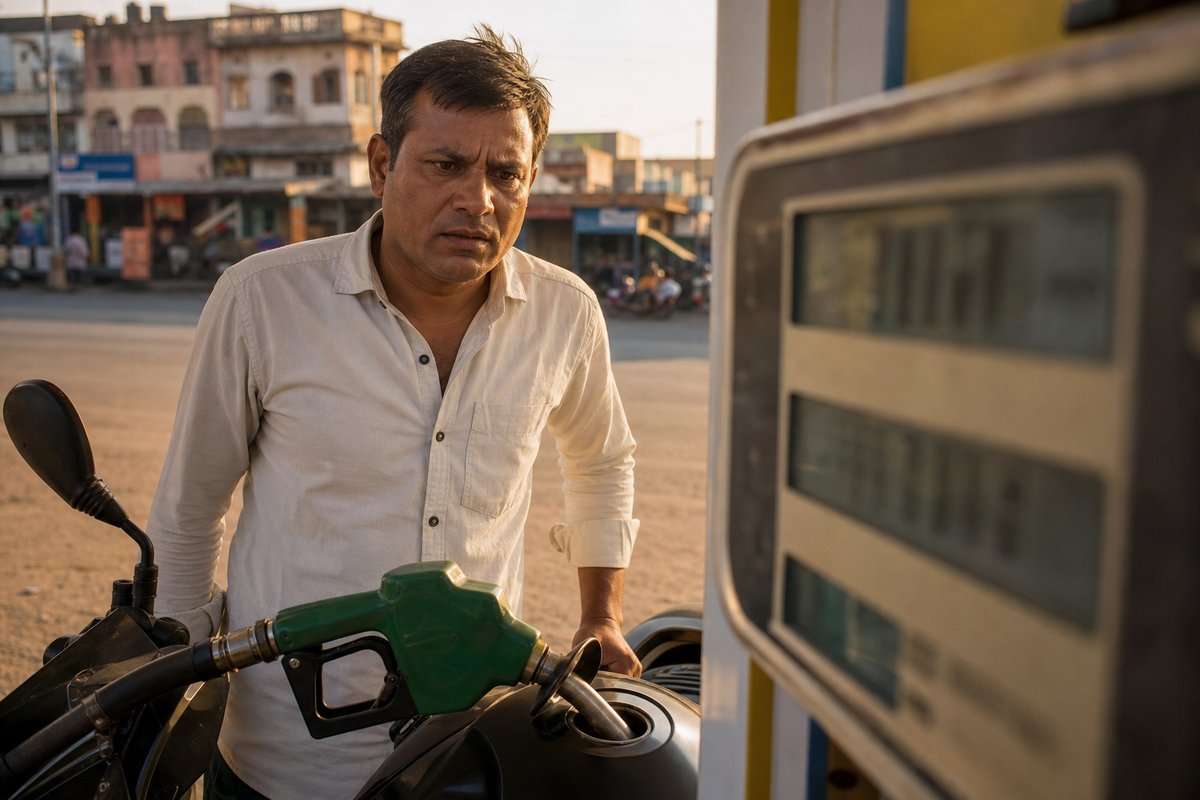
Tripathi’s calculation wasn’t wrong on paper. Thirty litres times ₹7 equals ₹210. Simple arithmetic.
But here’s what that arithmetic leaves out.
The National Floor Level Minimum Wage in India, according to Trading Economics data for 2026, stands at ₹178 per day. Many informal workers and daily wagers earn even less — some as low as ₹175 a day. That ₹210 “extra” Tripathi dismissed is more than a full day’s earnings for millions of Indians.
And fuel doesn’t just fill tanks. Diesel powers the trucks that carry vegetables, milk, bread, and every essential good across this country. When diesel goes up, transport costs go up. When transport costs go up, everything gets more expensive. The price at the pump is only the beginning.
A bike rider isn’t the only one buying petrol. Autorickshaw drivers fill up daily. Delivery workers zigzag across cities on two-wheelers. Small transport operators run fleets on thin margins. For them, ₹7.5 per litre isn’t a rounding error.
Central and state taxes account for roughly half of what you pay at the pump. The actual fuel cost is only part of the story.
Why Prices Shot Up
The Iran war, which began February 28, 2026, disrupted shipping through the Strait of Hormuz. Brent crude surged past $100 a barrel. India’s state-run oil marketing companies — IOCL, BPCL, HPCL — froze prices for 76 days despite the surge, losing ₹1,000 crore per day. Even after four rounds of hikes, MoPNG official Sujata Sharma said they were still losing ₹600 crore daily.
A weaker rupee made imports costlier. Brent crude dipped 5.1% to $98.22 on peace talk hopes, but remained volatile.
BJP leader Dilip Ghosh acknowledged the pressure. “The situation is beyond our control,” he said. “The supply is not in our hands. Therefore we are compelled to proceed in alignment with global trends.”
The Internet Fires Back
The backlash was instant and fierce.
One of the top responses came from @Atulsingh_asan, gathering 129 likes: “Bikau media won’t feel it, but common people will — the entire economy runs on oil. When inflation rises, everyone feels it.”
Another user, @HajiNizamuddin3, broke down the cascade: “7 rupees increase raises transport costs because everything comes via transport — that’s why everything gets expensive.”
The hashtags told the rest. “बिकाऊ मीडिया” — sold-out media. “गोदी मीडिया” — lapdog media. The anger wasn’t just about one comment. It was about what that comment represented — a disconnect between studios and street corners.
Politicians Pile On
Opposition leaders seized the moment. Congress President Mallikarjun Kharge called it a “Modi-govt-made crisis.” Jairam Ramesh accused the government of “fleecing consumers.” Samajwadi Party chief Akhilesh Yadav posted a bicycle cartoon — if you want to move forward, the cycle is the only option — a jab linking fuel costs to his party’s election symbol.
The political messaging was sharp. But the sharper message came from people filling tanks and watching grocery bills climb.
The Gap on Screen
What made the clip go viral wasn’t the math. It was the ease with which ₹210 was waved away on national television, in a country where that amount buys two days of meals for a family.
The national floor wage is ₹178 a day. Petrol in Delhi is ₹102.12 a litre. A news anchor said a ₹7 hike makes no difference.
When the people delivering the news can’t see the news on the ground, the disconnect stops being a talking point — it becomes the story.


